

 By
By Introduction
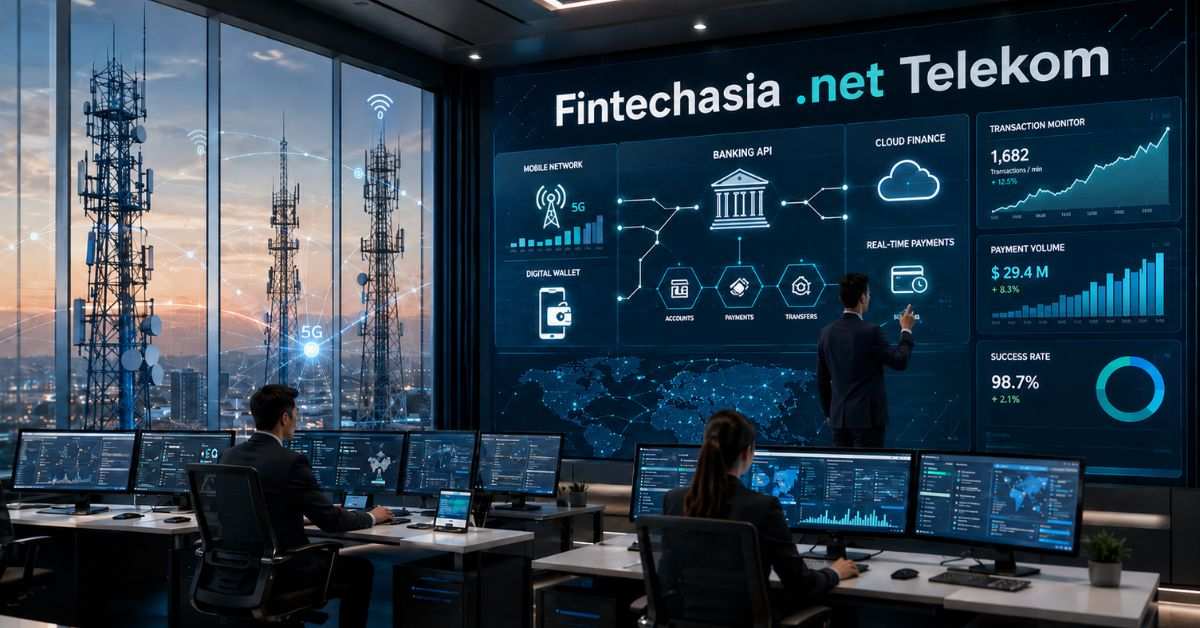
In today’s hyper-connected world, smartphones have become more than communication devices, they are financial tools. From digital wallets and mobile banking to microloans and insurance services, financial technology is rapidly reshaping how people access and manage money. At the heart of this transformation lies fintechasia .net telekom, a concept that refers to the integration of fintech systems with telecom networks to provide financial services through mobile platforms.
This integration bridges the gap between traditional banking infrastructure and widespread mobile connectivity. In regions where banking penetration is low but mobile usage is high, telecom-fintech collaboration unlocks financial inclusion at scale. Whether you’re a fintech entrepreneur, telecom provider, investor, or tech enthusiast, understanding how fintechasia .net telekom works can reveal new growth opportunities and innovation strategies.
In this in-depth guide, we’ll explore how fintech and telecom ecosystems converge, the technology powering them, real-world case studies, benefits, challenges, and what the future holds for this powerful digital alliance.
What Is Fintechasia .net Telekom?
Fintechasia.net telekom is where financial technology (fintech) and telecommunications systems come together. This integration allows users to access financial services directly via mobile networks without needing traditional bank branches.
At its core, it connects:
- Mobile network operators (MNOs)
- Digital payment platforms
- Banking APIs
- Cloud-based financial systems
- Identity verification tools
Key Components
- Mobile Wallet Integration: Users store and transfer funds via SIM-linked wallets.
- USSD and app-based banking: services that people in rural places can use even if they don’t have smartphones.
- API Connectivity: Seamless data exchange between telecom and banking systems.
- Digital Identity Verification: KYC via mobile authentication.
- Real-Time Payment Processing: Instant peer-to-peer (P2P) transactions.
This model is particularly transformative in emerging markets across Asia and Africa, where telecom networks often reach deeper than banking institutions.
By leveraging existing telecom infrastructure, fintechasia .net telekom lowers operational costs, improves accessibility, and accelerates digital financial inclusion.
Why Telecom Networks Are Crucial for Fintech Growth
Telecom networks provide the backbone for digital financial ecosystems. Without stable connectivity and user authentication systems, mobile financial services cannot function effectively.
Why Telecoms Matter
- Widespread Mobile Penetration: Over 5 billion global mobile users (GSMA).
- SIM-Based Identity: Built-in user verification mechanism.
- Billing Integration: Direct carrier billing capabilities.
- Network Reliability: Ensures transaction continuity.
- Data Infrastructure: Supports real-time financial analytics.
Fintech vs. Telecom Synergy
| Feature | Traditional Banking | Fintech + Telecom Model |
| Accessibility | Branch-based | Mobile-based |
| Onboarding | Paper-heavy | Digital KYC |
| Transaction Speed | Hours/Days | Real-time |
| Reach | Urban-focused | Urban & Rural |
| Cost Structure | High overhead | Lower infrastructure cost |
Telecom networks reduce the cost of customer acquisition and offer scalable infrastructure, enabling fintech platforms to reach millions rapidly.
Core Technologies Behind Fintechasia .net Telekom
Technology powers this integration. From APIs to blockchain, multiple innovations drive seamless connectivity between financial systems and telecom platforms.
Key Technologies
- Open APIs: Enable interoperability between banks and telecom providers.
- Cloud Computing: Scalable data storage and processing.
- AI & Machine Learning: Fraud detection and credit scoring.
- Blockchain: Secure, transparent transaction records.
- 5G Connectivity: Faster transaction processing and enhanced security.
Infrastructure Layers
- Network Layer (Telecom backbone)
- Application Layer (Mobile banking apps)
- Security Layer (Encryption & authentication)
- Financial Layer (Payment gateways & core banking systems)
By combining these technologies, fintechasia .net telekom ensures scalability, security, and operational efficiency.
Benefits for Consumers and Businesses

The integration creates a win-win situation for users and service providers alike.
For Consumers
- Easy mobile payments
- Instant money transfers
- Access to microloans
- Reduced transaction fees
- Financial inclusion without bank accounts
For Businesses
- Expanded customer reach
- Faster transaction processing
- Reduced infrastructure costs
- Real-time data insights
- Improved customer retention
Particularly in developing markets, this system empowers small businesses and gig workers with access to formal financial services via mobile devices.
Financial Inclusion Through Mobile Platforms
Financial exclusion remains a global issue. According to the World Bank, over 1.4 billion adults remain unbanked. Telecom-fintech integration directly addresses this gap.
How It Promotes Inclusion
- No need for physical branches
- Low-cost account setup
- Micro-savings programs
- Mobile-based credit scoring
- Accessible insurance products
Case Study: Mobile Money in Southeast Asia
A telecom-fintech collaboration in Southeast Asia enabled:
- 10+ million users onboarded within 3 years
- 40% increase in rural digital transactions
- 25% growth in SME digital lending
This demonstrates how fintechasia .net telekom models accelerate inclusive economic growth.
Security and Regulatory Considerations
Security is paramount in financial services. Integrating fintech with telecom networks requires strict compliance with global regulations.
Security Measures
- End-to-end encryption
- Multi-factor authentication
- SIM-based verification
- AI-driven fraud detection
Regulatory Compliance
- KYC (Know Your Customer)
- AML (Anti-Money Laundering)
- GDPR & data protection laws
- Central bank oversight
Trusted sources such as the Bank for International Settlements (BIS.org) highlight the importance of regulatory sandboxes for fintech innovation.
Proper governance ensures user trust and sustainable growth.
Revenue Models in Fintech-Telecom Integration
Fintechasia .net telekom opens multiple revenue streams for telecom operators and fintech firms.
Common Monetization Models
- Transaction fees
- Subscription-based premium services
- Merchant service fees
- Data-driven lending products
- Revenue-sharing agreements
Telecom operators diversify income beyond voice and data services, while fintech startups gain instant distribution networks.
Challenges and Barriers to Adoption
Despite benefits, integration isn’t without challenges.
Major Challenges
- Regulatory fragmentation
- Cybersecurity risks
- Infrastructure gaps in remote regions
- Interoperability issues
- Consumer trust barriers
Solving these requires collaboration between telecom regulators, central banks, and technology providers.
Real-World Case Study: Telecom-Fintech Collaboration
Case Study 1: Mobile Wallet Expansion
A major Asian telecom partnered with a fintech startup to launch a mobile wallet.
Results:
- 5 million users within 18 months
- 60% reduction in transaction processing costs
- 35% revenue growth in digital services
Case Study 2: Micro-Lending via Telecom Data
Using telecom data patterns:
- Credit scoring improved by 20%
- Loan default rates reduced by 15%
- Customer onboarding time cut in half
These examples demonstrate measurable ROI and operational efficiency.
Future Trends in Fintechasia .net Telekom
The future looks promising as technologies evolve.
Emerging Trends
- 5G-powered real-time payments
- Embedded finance within telecom apps
- AI-based predictive lending
- Cross-border mobile remittances
- Central Bank Digital Currency (CBDC) integration
As digital ecosystems mature, telecom companies may evolve into full-fledged financial service providers.
FAQs
What does fintechasia .net telekom mean?
It refers to the integration of fintech systems with telecom networks to deliver financial services via mobile platforms.
How does telecom infrastructure support fintech?
Telecom networks provide connectivity, identity verification, billing systems, and data infrastructure necessary for mobile financial services.
Is fintech-telecom integration secure?
Yes, when implemented with encryption, AI-based fraud detection, and regulatory compliance measures like KYC and AML.
Who benefits most from this model?
Unbanked populations, SMEs, telecom operators, fintech startups, and digital consumers benefit significantly.
What will happen with fintechasia .net telekom in the future?
It is expected to expand with 5G, AI, blockchain, and digital currency adoption, enhancing mobile-first financial ecosystems.
Conclusion
Fintechasia .net telekom is more than a technological integration, it is a transformative force redefining how financial services are delivered worldwide. By merging fintech innovation with telecom infrastructure, this model enables accessible, scalable, and cost-effective digital financial solutions.
From financial inclusion and micro-lending to real-time payments and AI-driven credit scoring, the possibilities are vast. While challenges such as regulation and cybersecurity remain, strategic partnerships and technological advancements continue to strengthen the ecosystem.