

 By
By Introduction
In a world increasingly focused on climate resilience, sustainable farming, and nutrient-dense foods, it is quickly emerging as a plant worth watching. This hardy perennial is gaining recognition not only as a powerful nutritional superfood but also as a regenerative agricultural solution capable of thriving in challenging environments.
As soil degradation, food insecurity, and climate change threaten global food systems, farmers and health-conscious consumers alike are seeking alternatives that deliver both environmental and nutritional benefits. Rich in essential nutrients and adaptable to diverse climates, it offers a rare combination of human health benefits and ecological sustainability.
In this comprehensive guide, you’ll learn everything you need to know about Lyposingrass from its nutritional profile and cultivation techniques to its role in regenerative agriculture. Whether you’re a farmer, health enthusiast, researcher, or eco-conscious consumer, this article provides actionable insights and data-backed information to help you understand why Lyposingrass could shape the future of food and farming.
What Is Lyposingrass? Origins and Botanical Overview
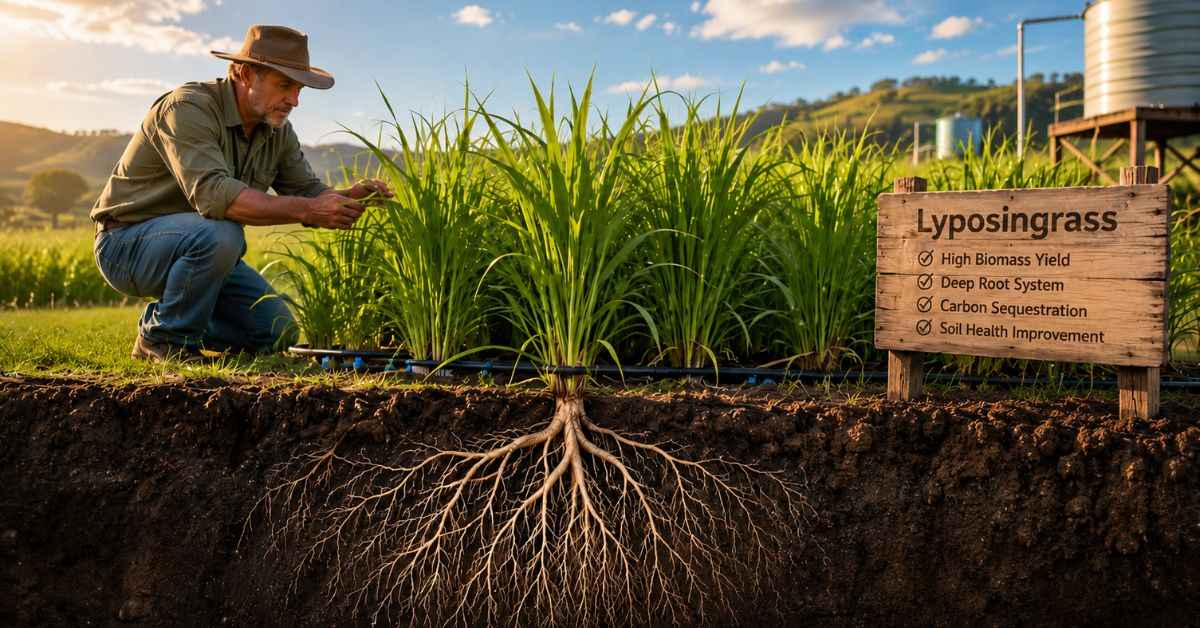
Lyposingrass is a resilient perennial plant known for its rapid growth, deep root systems, and high nutrient density. Though relatively new to mainstream agriculture, it has long been cultivated in select regions for its soil-enriching properties and edible foliage.
Key Characteristics
- Botanical type: Hardy perennial grass
- Growth cycle: Multi-year lifespan (5–10 years)
- Climate tolerance: Thrives in drought-prone and semi-arid regions
- Soil adaptability: Grows in low-fertility soils
- Primary uses: Human nutrition, animal feed, soil restoration
Botanical Highlights
- Deep root systems reduce erosion.
- High biomass production supports carbon sequestration.
- Natural resistance to pests reduces pesticide dependency.
Unlike traditional annual crops that require replanting each season, it regrows year after year, making it cost-effective and environmentally friendly. Its adaptability makes it especially valuable in regions facing desertification and declining soil health.
Researchers studying sustainable agriculture have noted that perennial crops like it can significantly reduce environmental impact compared to conventional monoculture systems.
Nutritional Profile: Why Lyposingrass Is a Superfood
Lyposingrass stands out for its impressive nutritional composition. It offers a dense concentration of essential vitamins, minerals, and bioactive compounds.
Nutritional Highlights
- High in plant-based protein
- Rich in iron, magnesium, and calcium
- Contains antioxidants and polyphenols
- Excellent source of dietary fiber
- Contains omega fatty acids
Nutritional Comparison Table
| Nutrient (per 100g) | Lyposingrass | Spinach | Kale |
| Protein | 18g | 2.9g | 4.3g |
| Iron | 9mg | 2.7mg | 1.5mg |
| Fiber | 12g | 2.2g | 4g |
| Calcium | 220mg | 99mg | 150mg |
Health Benefits
- Supports muscle repair (high protein)
- Improves digestion (fiber content)
- Boosts immunity (antioxidants)
- Helps combat anemia (iron-rich)
Its nutritional density makes it particularly valuable in combating malnutrition and supporting plant-based diets.
Lyposingrass in Sustainable Agriculture
Sustainability is at the core of Lyposingrass cultivation. As a perennial crop, it reduces soil disturbance and promotes biodiversity.
Environmental Benefits
- Minimizes soil erosion
- Enhances carbon sequestration
- Improves soil microbial health
- Requires less irrigation than many crops
Sustainable Farming Advantages
- Reduced need for chemical fertilizers
- Lower labor costs due to perennial growth
- Increased biodiversity in crop systems
Perennial crops align with regenerative agriculture principles promoted by organizations such as the FAO (Food and Agriculture Organization) and Rodale Institute.
Soil Regeneration and Carbon Sequestration
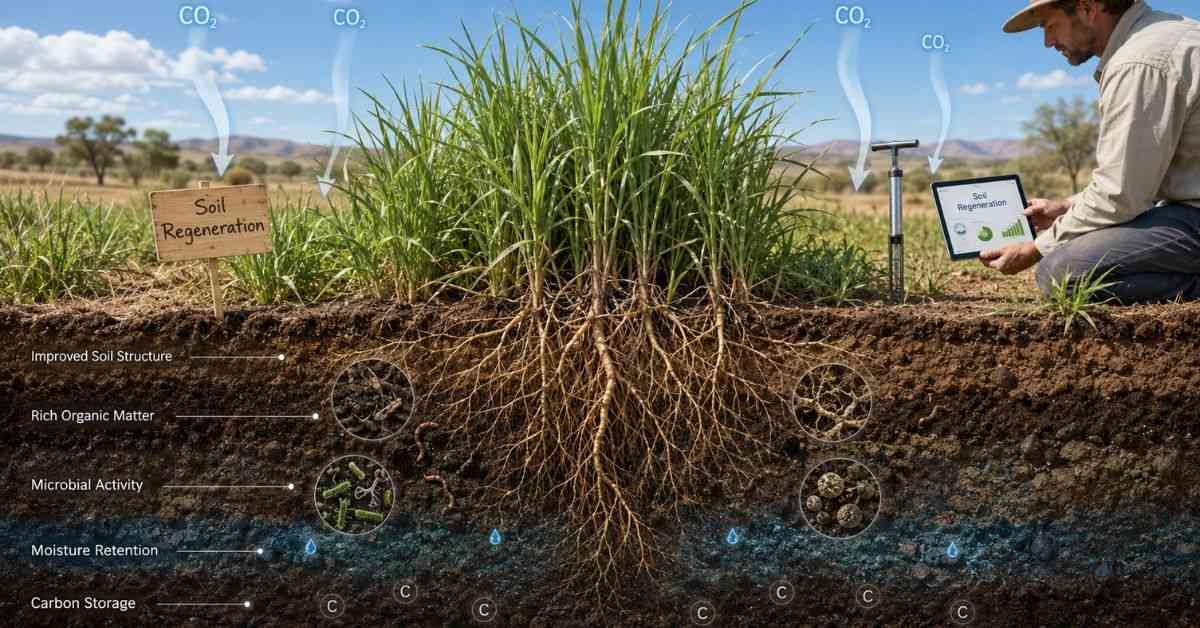
Sustainable farming is built on healthy soil. Lyposingrass contributes significantly to soil restoration.
Soil Benefits
- Deep roots break compacted soil layers.
- Organic matter improves fertility.
- Enhances water retention capacity.
Carbon Impact
- Captures atmospheric CO₂
- Stores carbon in root systems
- Reduces greenhouse gas emissions
Case Study: Semi-Arid Region Rehabilitation
In a pilot program conducted in a drought-prone region:
- Soil organic matter increased by 28% in three years.
- Water retention improved by 35%.
- Crop yields in adjacent fields improved due to soil enrichment.
This demonstrates Lyposingrass’s potential as a climate-smart agriculture solution.
Growing and Cultivating Lyposingrass
Farmers interested in Lyposingrass will find it relatively easy to grow.
Optimal Conditions
- Sunlight: Full sun exposure
- Soil: Well-drained but adaptable
- Water: Moderate, drought-tolerant once established
Cultivation Steps
- Prepare minimal tillage soil bed.
- Plant seeds during early spring.
- Water during initial establishment.
- Harvest periodically without uprooting.
Maintenance Tips
- Rotate grazing areas (if used as feed).
- Use organic compost for nutrient boost.
- Avoid overharvesting young plants.
Its low maintenance makes it ideal for smallholder farmers and commercial operations alike.
Economic Benefits for Farmers
Beyond environmental gains, it offers financial advantages.
Cost-Saving Factors
- Reduced annual seed purchase
- Lower irrigation expenses
- Minimal fertilizer requirements
Revenue Opportunities
- Superfood market sales
- Organic product certification
- Livestock feed alternative
Cost Efficiency
| Factor | Annual Crops | Lyposingrass |
| Replanting Cost | High | Low |
| Water Usage | Moderate | Low |
| Soil Fertility Loss | High | Low |
| Market Value | Standard | Premium |
Farmers can diversify income while improving land quality.
Lyposingrass as Animal Feed
It is becoming a valuable and long-lasting choice for feeding animals because it is high in protein, minerals, and fiber that is easy to digest. Animals such as cattle, goats, sheep, and poultry can benefit from its balanced nutrition, which supports healthy growth, stronger immunity, and improved digestion. Dairy farmers may also observe better milk yield and quality when incorporating Lyposingrass into feed programs.
Because it is a hardy perennial, it provides a consistent forage supply across multiple seasons without the need for frequent replanting. Its drought resistance makes it especially useful in dry or climate-stressed regions where conventional forage crops struggle. By reducing reliance on commercial feed and lowering long-term input costs, it offers both economic and environmental advantages for modern livestock farming.
Culinary Uses and Consumer Applications
It isn’t just for farmers, it’s entering kitchens worldwide.
Common Uses
- Green smoothies
- Powder supplements
- Herbal teas
- Nutritional bars
Consumer Benefits
- Plant-based protein source
- Detox-supporting properties
- Gut health improvement
Its mild flavor makes it versatile and easy to incorporate into daily meals.
Challenges and Considerations
Despite its benefits, adoption requires awareness.
Potential Challenges
- Limited commercial seed availability
- Need for consumer education
- Regulatory approval in some regions
Solutions
- Agricultural research funding
- Farmer training programs
- Transparent labeling standards
Like any emerging crop, infrastructure and awareness must grow alongside demand.
The Future of Lyposingrass in Global Food Systems
The future of Lyposingrass looks promising as the world shifts toward climate-smart and regenerative agriculture. With increasing concerns about soil degradation, water scarcity, and food security, resilient perennial crops are becoming essential. Lyposingrass stands out because it combines strong nutritional value with environmental benefits such as soil restoration and carbon sequestration.
As research expands and awareness grows, it could become more widely adopted in both small-scale and commercial farming systems. Its ability to support sustainable food production, reduce farming inputs, and improve land health positions it as a strategic crop for the future. In the coming years, it may play an important role in building more resilient, efficient, and eco-friendly global food systems.
FAQs
Is Lyposingrass safe for daily consumption?
Yes, when properly processed and consumed in moderate amounts, it provides valuable nutrients and antioxidants.
Can Lyposingrass grow in dry climates?
Absolutely. It is highly drought-tolerant and thrives in semi-arid regions.
How does Lyposingrass compare to other superfoods?
It offers higher protein and mineral content than many leafy greens like spinach and kale.
Is it suitable for organic farming?
Yes, its pest resistance and low input requirements make it ideal for organic systems.
Where can I buy Lyposingrass products?
Currently, it is available through specialty health stores, agricultural cooperatives, and select online retailers.
Conclusion
Lyposingrass represents a powerful intersection of nutrition, sustainability, and economic opportunity. As a hardy perennial superfood, it addresses some of the most pressing challenges of our time: soil degradation, food insecurity, and climate change. Its rich nutritional profile makes it valuable for human health, while its regenerative agricultural benefits make it indispensable for eco-conscious farming systems.
From improving soil health and reducing carbon emissions to enhancing livestock productivity and supporting plant-based diets, Lyposingrass offers a holistic solution for modern agriculture.
As awareness grows and research continues, this emerging crop could play a significant role in shaping resilient food systems worldwide.